


SUMMARY
Goldshell Miners bring high-efficiency proof-of-work mining closer to everyday users with compact machines designed for desktop and home-office setups. Their noise-optimized designs make home mining easier without the need for large industrial installations.
- Compact Box and Byte designs take up less space than traditional mining equipment.
- Several models work with suitable household electrical connections.
- Supported networks include Kaspa (KAS), Alephium (ALPH), Tari (XTM), Litecoin (LTC), Dogecoin (DOGE), and Siacoin (SC).
- Smaller machines have lower power requirements, while E-series models offer higher hashrates.
- Selected models support Wi-Fi, remote monitoring, and easy setup.
Why Do Home Operators Choose Goldshell Mining Environments?
Home mining has become more accessible with compact ASIC designs. Instead of installing large machines in a dedicated mining facility, users can now run selected miners in a home office, spare room, or workshop.

Goldshell offers different hardware designs to suit these needs. The Box series focuses on compact mining, the Byte system uses interchangeable algorithm cards, and the E-series delivers higher computing power.
Here are the main reasons home operators consider these machines:
Compact designs: Box miners have smaller bodies that fit on desks and shelves. For example, the XT Box measures 150 × 198 × 96 mm.
Lower noise on selected models: Many Box and Mini Doge models have rated noise levels of 35 dB or less. The E-series reaches up to 45 dB. Actual noise can change with fan speed, temperature, and room conditions.
Household power support: Several compact models use external power supplies and 12V DC connections. The E-series supports 110-240V AC input, although its higher power demand requires a properly rated circuit.
Remote monitoring: Selected models support Wi-Fi and mobile app controls. Users can check hashrate, temperature, and mining status without physically accessing the machine.
Multiple coin options: Goldshell builds miners for different algorithms, letting buyers choose hardware based on the cryptocurrency they want to mine.
Which Mining Algorithms Do Goldshell Miners Support?
The algorithm determines which cryptocurrency networks a miner can support. Understanding these differences helps buyers select suitable hardware.
What Is the Difference Between kHeavyHash and Blake3 Mining?
kHeavyHash is the algorithm used by Kaspa. The E-KA1M and KA Box Pro use this algorithm to contribute computing power to Kaspa mining pools.
Kaspa targets 10 blocks per second, with its block subsidy changing according to its emission schedule.
Blake3 is used by Alephium. The Byte AL Card supports this algorithm and offers a compact option for ALPH mining. Alephium uses 16 chains across four groups, and its block rewards change according to network conditions.
How Does Scrypt Mining Support Litecoin and Dogecoin?
Scrypt is used by Litecoin and Dogecoin. Goldshell’s E-DG1M, Mini Doge III, and Mini Doge III Plus support this algorithm.
These machines can mine both LTC and DOGE through compatible merged-mining pools. Merged mining allows the same Scrypt work to contribute to both networks, with the pool distributing rewards according to its payment rules.
Some compatible models and pools also support BELLS.
What Is SHA-3X Mining?
SHA-3X is used by Tari (XTM). The XT Box and Byte XT Card support this algorithm.
Tari uses multiple proof-of-work lanes, and the XT hardware contributes to its SHA-3X mining network. This gives users another option for collecting cryptocurrency through mining.
How Does Blake2b-Sia Mining Work?
The SC Box II uses Blake2b-Sia to mine Siacoin. The Sia network uses proof-of-work mining to secure its blockchain and support its decentralized storage ecosystem.
Its block reward is 30,000 SC after reaching the protocol’s minimum reward level.
Goldshell has also highlighted its desktop-focused XT Box on X, listing its 580 GH/s hashrate and 400W power consumption. View Goldshell’s XT Box posts on X.
Which Goldshell Miners Are Worth Considering?
The following eight models cover different mining requirements, from high-output machines to compact desktop options.
Which Higher-Output Goldshell Miners Should You Consider?
1. Goldshell E-KA1M
The Goldshell E-KA1M is a Kaspa ASIC designed for users who want higher kHeavyHash performance. It delivers 5.5 TH/s at 1,800W, while its low-power mode offers 3.8 TH/s at 1,100W.
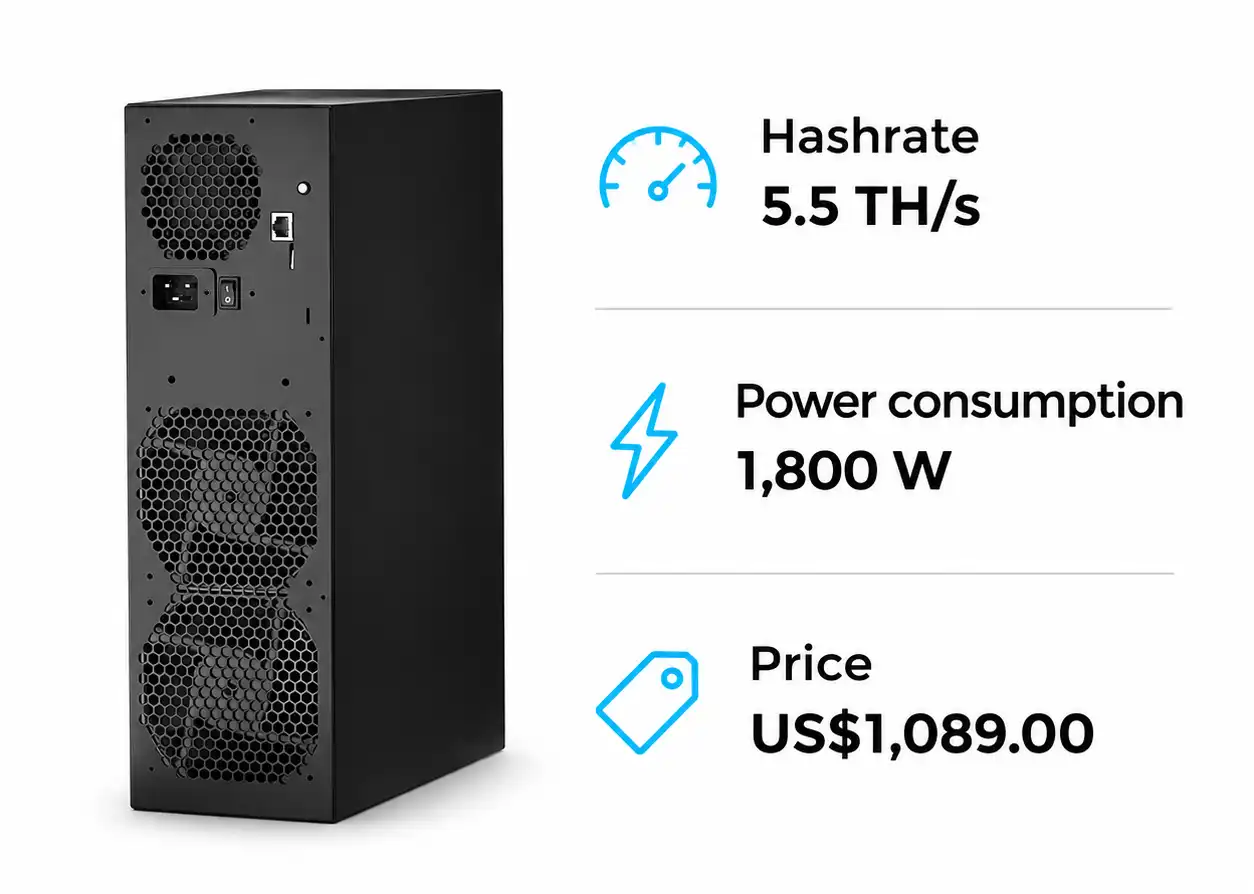
Its built-in power supply and Wi-Fi support simplify installation and monitoring. The manufacturer-rated noise level reaches up to 45 dB.
- Algorithm: kHeavyHash
- Hashrate: 5.5 TH/s
- Power: 1,800W
- Efficiency: 327 J/TH
- Low-power mode: 3.8 TH/s at 1,100W
- Coin: KAS
2. Goldshell E-DG1M
The Goldshell E-DG1M is built for Scrypt mining and supports Litecoin, Dogecoin, and BELLS through compatible pools.

It produces 3.4 GH/s at 1,800W. Its low-power mode delivers 2.6 GH/s at 1,100W, giving users another way to manage electricity costs.
- Algorithm: Scrypt
- Hashrate: 3.4 GH/s
- Power: 1,800W
- Efficiency: 529 J/GH
- Low-power mode: 2.6 GH/s at 1,100W
- Coins: LTC, DOGE, BELLS
Which Compact Box and Card Miners Are Suitable for Home Mining?
3. Goldshell XT Box
The Goldshell XT Box is designed for Tari SHA-3X mining. It delivers 580 GH/s at 400W, with an efficiency rating of 0.69 J/GH.
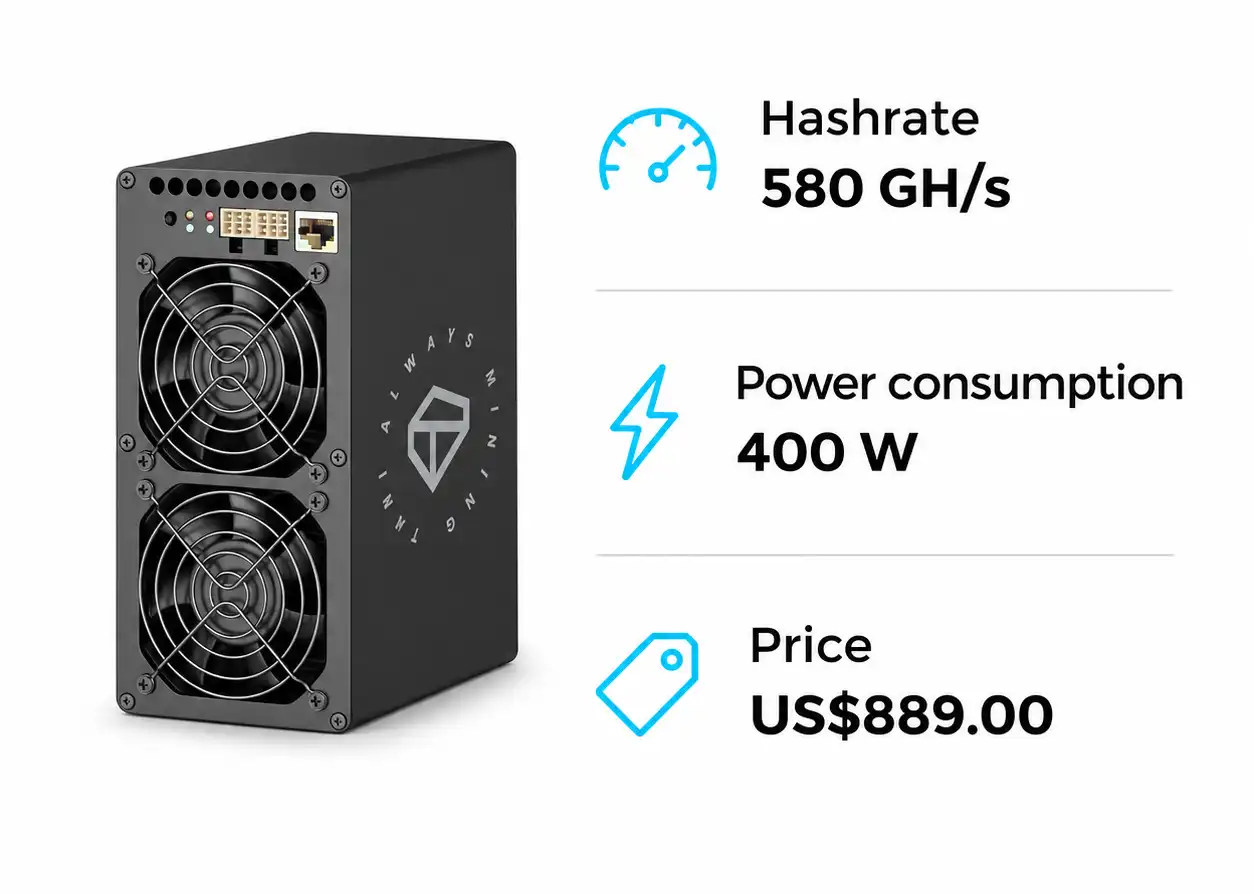
Its compact body, Wi-Fi support, and noise rating of 35 dB or less make it suitable for smaller mining setups.
- Algorithm: SHA-3X
- Hashrate: 580 GH/s
- Power: 400W
- Efficiency: 0.69 J/GH
- Coin: XTM
- Noise: ≤35 dB
4. Goldshell KA Box Pro
The Goldshell KA Box Pro delivers 1.6 TH/s of kHeavyHash performance at 600W.
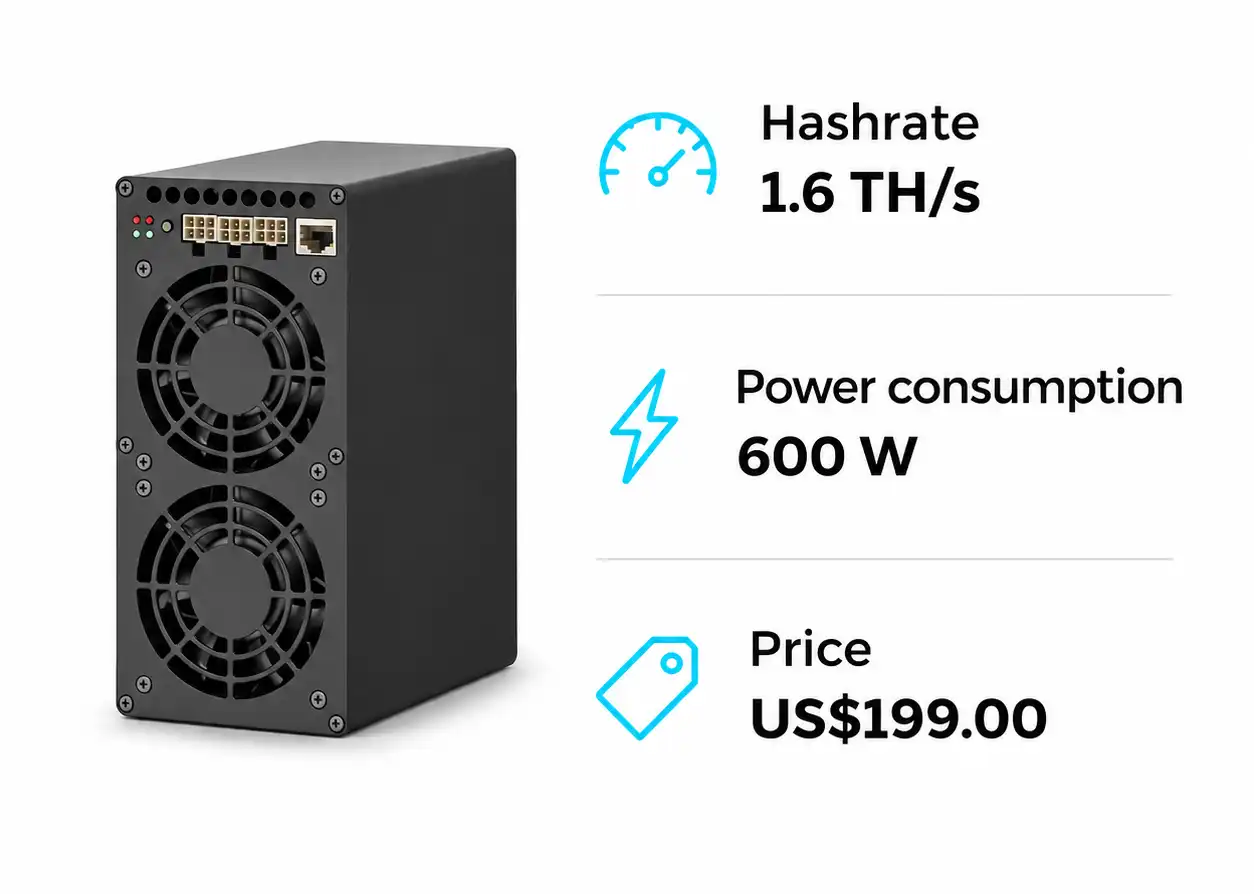
It is a compact Kaspa miner for users who want less power consumption than the E-KA1M. Its efficiency is rated at 375 J/TH, and its manufacturer-rated noise level is 35 dB or less.
- Algorithm: kHeavyHash
- Hashrate: 1.6 TH/s
- Power: 600W
- Efficiency: 375 J/TH
- Coin: KAS
- Noise: ≤35 dB
5. Goldshell SC Box II
The Goldshell SC Box II is designed for Blake2b-Sia mining.
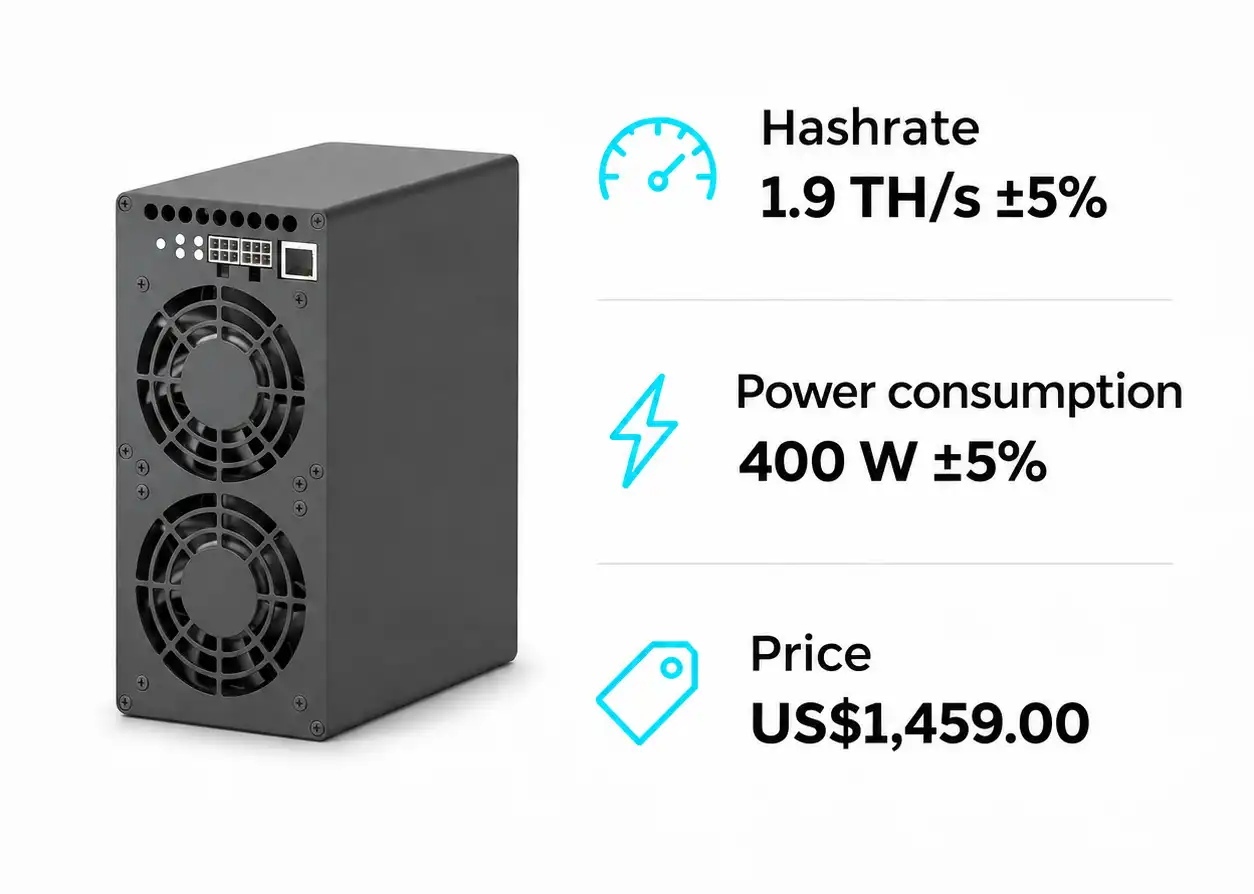
It delivers 1.9 TH/s at 400W, with a low-power mode of 1.45 TH/s at 260W. Its compact design and 35 dB noise rating make it a practical choice for Siacoin miners.
- Algorithm: Blake2b-Sia
- Hashrate: 1.9 TH/s
- Power: 400W
- Low-power mode: 1.45 TH/s at 260W
- Coin: SC
- Noise: 35 dB
6. Goldshell Mini Doge III 700 MH/s
The Goldshell Mini Doge III is a compact Scrypt miner with a standard hashrate of 700 MH/s.

It consumes 400W and supports LTC, DOGE, and BELLS through compatible mining pools. Its 0.57 J/MH efficiency and 35 dB or lower noise rating make it suitable for smaller Scrypt setups.
- Algorithm: Scrypt
- Hashrate: 700 MH/s
- Power: 400W
- Efficiency: 0.57 J/MH
- Coins: LTC, DOGE, BELLS
- Noise: ≤35 dB
7. Goldshell Mini Doge III Plus 810 MH/s
The Goldshell Mini Doge III Plus increases the standard hashrate to 810 MH/s at 500W.

Its low-power mode delivers 620 MH/s at 300W. Like the regular Mini Doge III, it supports LTC, DOGE, and BELLS through compatible pools.
- Algorithm: Scrypt
- Hashrate: 810 MH/s
- Power: 500W
- Efficiency: 0.62 J/MH
- Low-power mode: 620 MH/s at 300W
- Coins: LTC, DOGE, BELLS
8. Goldshell Byte
The Goldshell Byte uses interchangeable algorithm cards instead of being limited to one fixed mining algorithm.

Its available cards include XT for SHA-3X, AL for Blake3, and DG for Scrypt. The high-power mode provides 100 GH/s for XT, 120 GH/s for AL, and 80 MH/s for DG, with each card consuming 65W.
- XT Card: 100 GH/s at 65W
- AL Card: 120 GH/s at 65W
- DG Card: 80 MH/s at 65W
- Main unit dimensions: 135 × 63 × 106 mm
- Main unit weight: 0.4 kg
- Main unit noise: 45 dB
- Connection: Wi-Fi
The default card mode consumes 45W and delivers a lower hashrate. The high-power mode requires a compatible 140W Goldshell charger. Check the selected package to confirm which cards and accessories are included.
How Do the Goldshell Models Compare?
Hardware specifications, data as of November 27, 2026. The table uses standard or high-power operating modes.
|
Miner |
Algorithm |
Hashrate |
Power |
Noise |
|
E-KA1M |
kHeavyHash |
5.5 TH/s |
1,800W |
≤45 dB |
|
E-DG1M |
Scrypt |
3.4 GH/s |
1,800W |
≤45 dB |
|
XT Box |
SHA-3X |
580 GH/s |
400W |
≤35 dB |
|
KA Box Pro |
kHeavyHash |
1.6 TH/s |
600W |
≤35 dB |
|
SC Box II |
Blake2b-Sia |
1.9 TH/s |
400W |
≤35 dB |
|
Mini Doge III |
Scrypt |
700 MH/s |
400W |
≤35 dB |
|
Mini Doge III Plus |
Scrypt |
810 MH/s |
500W |
≤35 dB |
|
Byte XT Card |
SHA-3X |
100 GH/s |
65W |
45 dB main unit |
|
Byte AL Card |
Blake3 |
120 GH/s |
65W |
45 dB main unit |
|
Byte DG Card |
Scrypt |
80 MH/s |
65W |
45 dB main unit |
How Much Can These Miners Earn Per Day?
A miner’s hashrate alone cannot determine its daily income. Coin price, total network hashrate, block reward, block time, and electricity cost all affect the final result.
Which Coin Prices and Network Inputs Are Used?
Market and network data as of November 27, 2026.
|
Coin |
Price (USD) |
Network Input |
Reward or Block Data |
|
KAS |
$0.02703 |
303.38 PH/s |
1.94454365 KAS/block; 0.1-second target |
|
XTM |
$0.00050093 |
493.071 TH/s |
9,852.16 XTM/block; 2-minute chain target |
|
DOGE |
$0.05782 |
2.5568 PH/s |
10,000 DOGE/block; 60-second target |
|
LTC |
$44.09 |
2.49 PH/s |
6.25 LTC/block; 150-second target |
|
ALPH |
$0.02853 |
5.42 PH/s |
23,068 ALPH/day network emission |
|
SC |
$0.00059835 |
3.358 PH/s |
30,000 SC/block; difficulty 2.001 × 10¹⁸ |
The calculations use the network inputs, corresponding block intervals, and market prices. Network and market references include Kaspa, Tari, Dogecoin, Litecoin, Alephium, and Sia.
What Electricity Rate Is Used?
The baseline electricity rate is $0.10 per kWh, with all miners operating for 24 hours.
The calculation uses:
- Coin prices and network inputs above.
- Manufacturer-rated power consumption.
- 24-hour daily operation.
- $0.10/kWh electricity.
- 100% assumed uptime.
Daily electricity cost is calculated as:
Power in kW × 24 hours × electricity rate.
For Scrypt models, DOGE and LTC rewards are calculated separately and added together. BELLS rewards are excluded because they depend on the selected pool. Siacoin output is estimated using network difficulty, while Alephium output uses its listed block reward.
Which Miners Have the Best Estimated Daily Returns?
Estimated profitability, data as of November 27, 2026. Figures are rounded and show mining revenue after electricity costs only.
|
Miner |
Estimated daily output |
Gross revenue |
Electricity |
Net estimate |
|
E-KA1M |
30.46 KAS |
$0.82 |
$4.32 |
-$3.50 |
|
KA Box Pro |
8.86 KAS |
$0.24 |
$1.44 |
-$1.20 |
|
XT Box |
2,642 XTM |
$1.32 |
$0.96 |
+$0.36 |
|
E-DG1M |
19.15 DOGE + 0.00492 LTC |
$1.32 |
$4.32 |
-$3.00 |
|
Mini Doge III |
3.94 DOGE + 0.00101 LTC |
$0.27 |
$0.96 |
-$0.69 |
|
Mini Doge III Plus |
4.56 DOGE + 0.00117 LTC |
$0.32 |
$1.20 |
-$0.88 |
|
SC Box II |
2,461 SC |
$1.47 |
$0.96 |
+$0.51 |
|
Byte XT Card |
456 XTM |
$0.23 |
$0.16 |
+$0.07 |
|
Byte AL Card |
0.51 ALPH |
$0.01 |
$0.16 |
-$0.14 |
|
Byte DG Card |
0.45 DOGE + 0.000116 LTC |
$0.03 |
$0.16 |
-$0.12 |
At the selected electricity rate, the SC Box II has the highest estimated daily result among the machines. The XT Box is close to its electricity break-even point. The higher-power models need cheaper electricity or improved mining revenue to produce better results.
These are theoretical estimates, not guaranteed pool payments. Pool fees, downtime, power supply losses, cooling costs, hardware depreciation, and taxes are not included. Results change with coin prices, network difficulty, block rewards, and electricity rates.
How Can You Improve Long-Term Mining Returns?
Selecting a machine is only the first step. Electricity, ventilation, pool choice, and regular monitoring also affect your overall Goldshell Mining results.
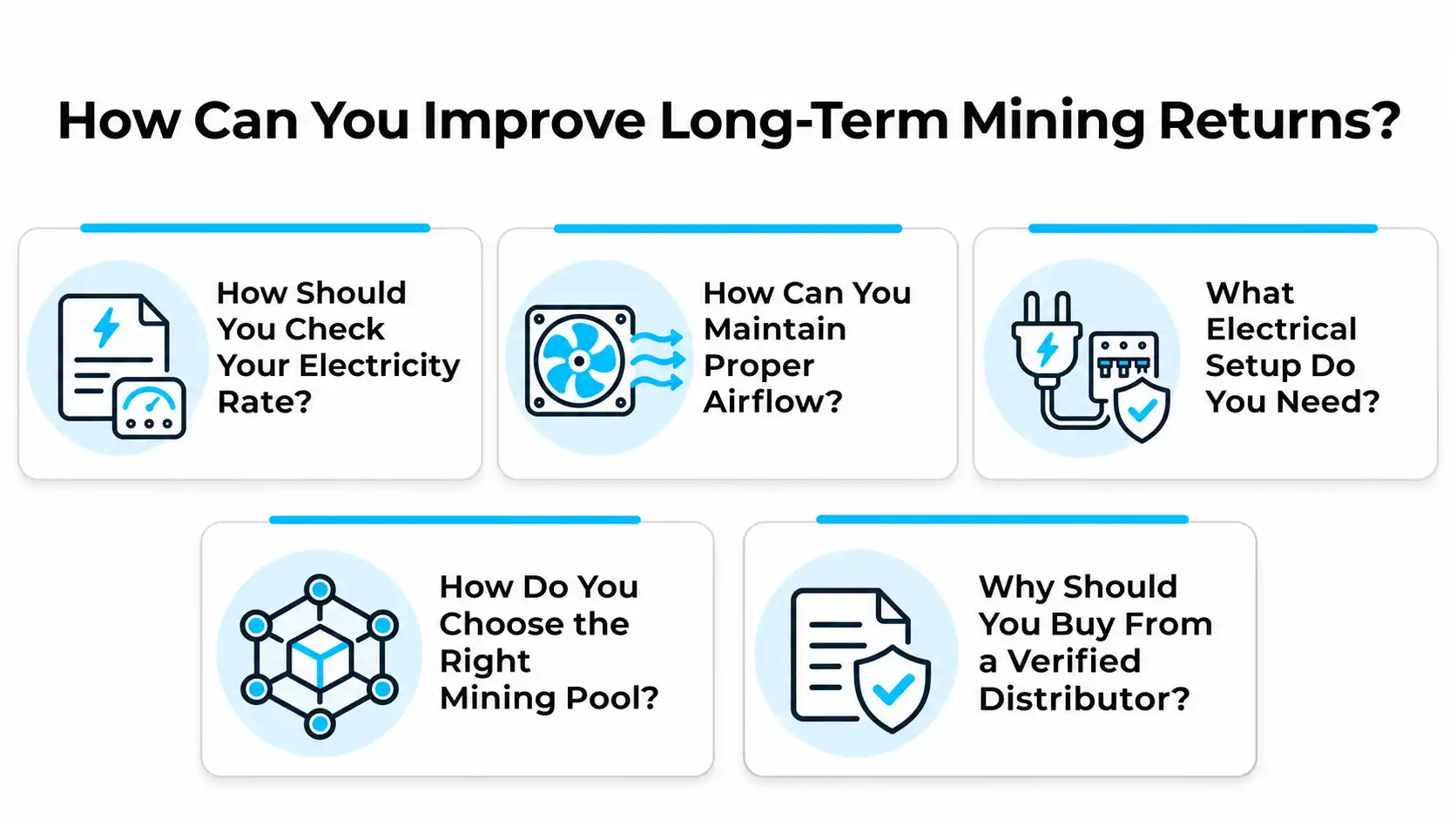
1. How Should You Check Your Electricity Rate?
Check the total amount you pay per kWh, including applicable usage charges. Do not calculate costs using only the base energy charge.
|
Power draw |
Daily energy use |
Cost at $0.05/kWh |
Cost at $0.10/kWh |
|
65W |
1.56 kWh |
$0.08 |
$0.16 |
|
400W |
9.6 kWh |
$0.48 |
$0.96 |
|
500W |
12 kWh |
$0.60 |
$1.20 |
|
600W |
14.4 kWh |
$0.72 |
$1.44 |
|
1,800W |
43.2 kWh |
$2.16 |
$4.32 |
This comparison shows how a lower electricity rate can improve daily returns.
2. How Can You Maintain Proper Airflow?
ASIC miners produce heat during continuous operation. A suitable room setup helps them maintain stable performance.
Follow these steps:
- Place the machine on a stable surface with enough space around its air intake and exhaust.
- Keep it away from direct sunlight and other heat sources.
- Avoid closed cabinets and small storage spaces.
- Clean dust from the fans and air intake regularly.
- Monitor temperature and fan operation through the supported software.
Check the operating temperature limits for your exact model and keep the room within the recommended range.
3. What Electrical Setup Do You Need?
Smaller miners generally have lower electrical requirements than the E-series. Before installation, check the power supply rating, input voltage, cable capacity, and outlet rating.
The E-KA1M and E-DG1M draw approximately 1,800W. Avoid overloaded outlets, unsuitable adapters, and low-rated extension cables. Have an electrician inspect the circuit when required.
4. How Do You Choose the Right Mining Pool?
A mining pool combines the computing power of several miners and distributes rewards according to its payment system.
Compare these points before joining:
- Pool fees and payout structure.
- Minimum withdrawal amount.
- Supported mining algorithm and coins.
- Server location and connection stability.
- Recent performance and payment history.
A pool with clear payout rules makes it easier to track daily coin production.
5. Why Should You Buy From a Verified Distributor?
A trusted seller helps buyers obtain genuine mining hardware, suitable power supplies, and clear warranty terms.
Before purchasing, check the invoice, serial number, warranty duration, shipping terms, and return conditions. Keep the original packaging and purchase documents for future support.
Which Goldshell Miner Should You Choose?
The best machine depends on the coin you want to mine, your electricity rate, and your available power supply.
The SC Box II has the strongest estimated daily result in this comparison at $0.10/kWh. The XT Box is close to its electricity break-even point, while the E-KA1M and E-DG1M suit buyers who have access to higher-capacity electrical connections.
The KA Box Pro and Mini Doge models offer smaller alternatives for Kaspa and Scrypt mining. Byte is worth considering for buyers who prefer interchangeable algorithm cards.
Goldshell Miners offer different ways to participate in proof-of-work networks, but comparing actual operating costs with expected coin production is the best way to make a buying decision.
CONCLUSION
Goldshell offers mining hardware for several networks, from the compact Byte system to the higher-output E-series. Each machine serves a different purpose, so buyers should compare hashrate, electricity use, coin rewards, and hardware costs before choosing.
Among the models reviewed, the SC Box II has the strongest estimated daily result at the selected electricity rate, while the XT Box is close to break-even. Buyers can explore the available models through Cryptominerbros and compare power requirements and warranty terms before purchasing.
A careful comparison of current network data and electricity costs gives you a better starting point for a home mining setup.
Frequently Asked Questions
-
Do These Home-Focused Machines Require Custom Electrical Wiring?
Most compact models can use suitable household power connections. However, the E-KA1M and E-DG1M draw approximately 1,800W and need a properly rated electrical circuit. Check the power requirements before installation.
-
Can I Switch My Hardware Between Completely Different Algorithms?
A conventional ASIC is designed for a specific algorithm and cannot simply change to another through software. Goldshell Byte supports interchangeable algorithm cards, allowing users to change between compatible mining options by replacing the cards.
-
What Is the Typical Noise Level of a Desktop Box Miner During Peak Operation?
Many Goldshell Box models have rated noise levels of 35 dB or less. The Byte main unit is rated at 45 dB, while the E-series reaches up to 45 dB. Actual noise depends on fan speed and operating temperature.
-
How Does Dual Mining Work on Scrypt-Based Models?
Scrypt miners can use merged-mining pools to mine Litecoin and Dogecoin at the same time. The pool calculates rewards for both networks and distributes the coins according to its payout rules. Some compatible setups also support BELLS.
-
Why Is Choosing a Trusted Distributor Vital for Warranty Protection?
A reliable distributor provides genuine hardware, correct accessories, and clear warranty information. Check the serial number, invoice, warranty period, and return conditions before purchasing so you have the required details for after-sales support.

Join our Newsletter
Get the week’s best cryptomining content in your inbox.

Han su
Han Su is a technical analyst at CryptoMinerBros, a leading provider of cryptocurrency mining hardware. He has over 5 years of experience in the cryptocurrency industry and is an expert in mining hardware, software, and profitability analysis.
Han is responsible for the technical analysis and research on ASIC Mining at Crypto Miner Bros. He also writes in-depth blogs on ASIC mining and cryptocurrency mining, and he has a deep understanding of the technology. His blogs are informative and engaging, and they have helped thousands of people learn about cryptocurrency mining.
He is always looking for new ways to educate people about cryptocurrency, and he is excited to see how the technology continues to develop in the years to come.
In spare time, Han enjoys hiking, camping, and spending time with his family. He is also an avid reader, and he loves to learn about new things.
Similar Blogs
Thanksgiving ASIC Miner Deals: Find Your Next Mining Upgrade
Why Is Thanksgiving a Good Time to Upgrade Your ASIC Mining Hardware? ASIC miners are built to perfo...
What is the SHA-3X Algorithm and How It Works
What Is the SHA-3X Algorithm and Why Does Tari Use It? Tari Labs developed this custom Proof-of-Work...
Hydro Mining Containers: Complete Setup Guide for Crypto Mining Farms
What Are Water-Cooled Mining Containers and How Do They Work? Hydro mining containers are steel unit... © 2018- Miner Bros Limited. All rights reserved

 EN EN
 ES