




RESUMEN
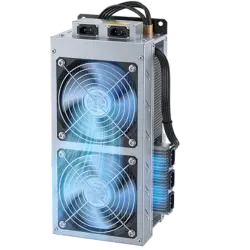
Mining cryptocurrency produces a lot of heat, which can harm your equipment and lower your profits. Your mining rig is essentially a computer operating at full power and continuously calculating complex algorithms that result in heat being generated.
Hence, if not appropriately managed, thermal output can lead to your mining device’s throttling performance, unexpected shutting off, or even permanent hardware damage. This detailed ASIC miner cooling guide contains all the necessary steps to help you set up a cool and efficient mining environment.
Regardless of whether you have a single unit or a mining farm, knowing how to handle heat dissipation is the best way to keep your hardware safe and make the most of your income.
Understanding Heat Generation in Mining Hardware
Mining equipment consumes electrical energy, and the work is computational; the excess energy is released as heat. A single unit can produce from 1,300 to 3,500 watts of heat, which is equivalent to the heat produced by several space heaters running at the same time.
| Miner Model | Consumo de energía | Heat Output (BTU/hr) | Cooling Required |
| Antminer S19 Pro | 3250W | 11,000 | High-capacity exhaust |
| Whatsminer M30S+ | 3400W | 11,600 | Industrial ventilation |
| Antminer S9 | 1320W | 4,500 | Standard home cooling |
The processing chips are running at high frequencies, so the temperature goes up very fast if the heat is not properly dissipated. The heat trapped in small spaces causes the creation of hostile environments that lead to hardware degradation.
The higher the temperature, the higher the failure rate for electronic components; thus, the lifespan of the equipment is shortened. Knowing this heat problem is the way to start implementing practical solutions for mining heat control and proper ASIC Miner ventilation in your facility.
How to Cool ASIC Miners at Home
Home mining presents unique challenges due to limited space and residential power constraints. Start by choosing a dedicated area away from living spaces, preferably a garage, basement, or spare room with external wall access.
Essential steps for home miner cooling:
- Put your hardware close to windows or vents to help with heat removal and keep the correct ASIC airflow in the room.
- Mount exhaust fans to remove the hot air outside, and at the same time, bring in the cool air from a different opening to have a continuous air circulation.
- Have a straight airflow line by locating intake fans facing the exhaust openings, which will help in cooling to the maximum possible extent.
- Seal gaps around ventilation points to prevent recirculation of hot air back into the cooling intake area.
A cooling system for ASIC miners doesn’t require expensive industrial equipment initially. It is essential to take into account the noise that the mining equipment will cause to the household members and neighbors when choosing locations.
The main point to remember is to set up a flow of air that constantly takes the heat away at a faster rate than the heat your devices are producing, thus avoiding the accumulation of thermal energy. Understanding how to cool miners at home should be preceded by choosing the right space and planning the fan positioning accordingly.
Best Ventilation for ASIC Mining Room
Proper ventilation moves hot air out while bringing fresh, cool air in continuously. Calculate your room’s cubic footage and match fan capacity to exchange air multiple times per hour. Understanding ASIC miner ventilation requirements helps you size your cooling infrastructure appropriately.
Ventilation setup components:
- Inline duct fans rated for continuous duty, typically 400-800 CFM, depending on your setup size (best fans for mining operations)
- Intake vents are positioned low on one wall, and exhaust vents are high on the opposite wall, utilizing natural heat rise.
- Rigid or semi-rigid ductwork to maintain airflow efficiency without restrictions or collapse
- Air filters on intake points to prevent dust accumulation on mining hardware components
| Room Size | Minimum CFM Required | Recommended Fan Type | Air Changes Per Hour |
| 10×10 ft | 500-600 CFM | 6-inch inline duct fan | 30-36 |
| 15×15 ft | 800-1000 CFM | 8-inch inline duct fan | 21-26 |
| 20×20 ft | 1200-1500 CFM | 10-inch or dual 8-inch | 18-22 |
Negative pressure systems do a great job with miner ventilation as they exhaust more air than is taken in, thus not allowing the hot air to escape the ventilated area to the adjacent ones. Always filter the intake air to prevent dust from accumulating on the mining hardware, which acts as an insulator for the heat and thus the cooling efficiency is significantly reduced. The best fans are those designed for continuous industrial operation rather than residential intermittent use.
Air Cooling vs Immersion Cooling ASIC
Choosing between cooling methods depends on your budget, space, and long-term mining goals. Traditional air cooling uses fans to move heat away from components, representing the most common and accessible method.
Air Cooling Advantages:
- Minimal modifications to standard equipment are sufficient for installation.
- Lower initial investment costs for home and small scale operations.
- Easy maintenance with replacement parts and components that are readily available.
- Compatible with all existing mining hardware without the need to void manufacturer warranties.
Air Cooling Disadvantages:
- Less efficient in hot climates where ambient temperatures exceed 30C regularly.
- It generates substantial noise levels which can cause disturbance in residential environments.
- Proper airflow and ventilation require a lot of space.
- There is higher energy consumption for cooling in extreme temperature conditions.
Immersion cooling involves submerging the equipment into a non, non-conductive liquid that absorbs the heat much better than air.
In this way, the method eliminates practically all the problems related to ASIC cooling, as it is entirely silent, and the temperatures are even lower than before. The fluid heats up directly from the components, after which it is sent to radiators or cooling towers.
In the case of a home operation, immersion cooling is the right choice only for miners who are serious and ready to invest in an advanced infrastructure to get better performance. As a result, to have an energy efficient mining setup. The technology for ASIC cooling is on the rise, with immersion systems getting cheaper every year.
Reduce ASIC Miner Heat and Noise
Managing both thermal output and sound levels improves your mining environment significantly. The dual challenge of heat and noise requires strategic planning and proper equipment selection. Effective noise reduction techniques combined with temperature management create comfortable operating conditions.
Heat reduction strategies:
- Keep ideal temperature for ASIC mining between 15 – 30 °C for the best performance and component life.
- By placing the unit away from heat-sensitive electronics, you not only protect the other household equipment from thermal damage but also ensure safe operation.
- Run it in the cooler night hours when the need for residential cooling is low, and electricity might be cheaper.
- Install temperature monitoring systems to track real-time conditions and adjust cooling dynamically.
Noise reduction begins with enclosures or specially designed soundproof rooms that have acoustic foam lining. Exhaust is taken away from the living areas through insulated ducting that also damps the sound transmission effectively. You can replace stock fans with quieter models if you wish, but be aware that in some cases, this may void the warranties on the equipment.
By lessening the heat, the noise will be reduced as well because the cooling fans will run at a slower speed, and hence, the operation will be quieter. Understanding how to reduce ASIC miner heat effectively also solves noise problems simultaneously.
How to Prevent ASIC Overheating
Prevention requires monitoring, maintenance, and responsive adjustments to changing conditions. Install temperature sensors throughout your mining area to track hot spots and airflow effectiveness in real-time. Knowing how to prevent ASIC overheating protects your investment from catastrophic failures.
| Prevention Method | Frequency | Impact Level | Cost |
| Clean dust filters | Weekly | High | Low |
| Inspect heatsinks | Monthly | High | Low |
| Replace thermal paste | Quarterly | Medium | Medium |
| Check fan operation | Daily (automated) | Critical | Low |
Overheating prevention checklist:
- Automated alarms should be configured to signal when the temperature levels go beyond the safe thresholds so that quick actions can be taken to prevent the expensive components from being damaged.
- Filters should be cleaned of dust weekly, and equipment should be inspected monthly for any dust deposits in the heatsinks or cooling fins.
- Sufficient space should be left between several units so that the air can flow uninterruptedly around each device.
- Firmware updates sometimes include improved fan curves and temperature management protocols from manufacturers for better performance.
Thermal paste sandwiched between chips and heatsinks naturally wears out over time, and thus, it must be replaced periodically to ensure that heat transfer is efficient. Mining heat Control involves cutting back work during very hot weather when the ambient temperature suddenly spikes.
Regular maintenance, if done in advance, is much cheaper than the replacement of the damaged parts of the equipment resulting from overheating incidents that could have been avoided. The ideal temperature for ASIC mining ensures maximum hashrate without thermal throttling.
Setting Up Your Cooling Infrastructure
Begin infrastructure setup by calculating total heat output from all equipment combined. Measure your space dimensions to determine required airflow capacity using proper calculations. Implementing a cooling system for ASIC miners requires careful planning and appropriate component selection.
Infrastructure setup steps:
- Calculate CFM using the formula: total watts x 3.41 ÷ temperature rise x1.08 for accurate sizing requirements.
- Purchase industrial-grade exhaust fans that are rated for continuous operation. Do not use residential models that are designed for intermittent use only.
- Mount the exhaust fans securely and seal all the gaps with weatherstripping or foam to prevent air leakage that lowers the efficiency.
- Create negative pressure by making the exhaust capacity slightly higher than the intake capacity for optimal airflow control.
| Setup Component | Budget Option | Premium Option | Performance Difference |
| Exhaust Fan | $80-150 | $300-500 | Noise level & longevity |
| Ducting | $50-100 | $200-350 | Airflow efficiency |
| Controllers | $30-60 | $150-300 | Automation features |
| Filters | $20-40 | $80-150 | Filtration quality |
Install miner ventilation components using either flexible or rigid ducting, ensuring that there are minimal bends in order to maintain the airflow efficiency.
An energy efficient mining setup balances the cooling power consumption against the mining profitability margins.
Connect fans to thermostats or smart controllers that change the speed based on the temperature readings automatically, thus cutting down the power consumption that is not necessary during the cooler periods.
Good airflow for the ASICs will prevent the formation of hot spots and will guarantee that the temperatures are evenly distributed across all the equipment.
Monitoring and Maintenance
Continuous monitoring protects your investment through early problem detection. Use dedicated monitoring software that tracks individual unit temperatures, hashrates, and error rates in real-time for comprehensive oversight. This ASIC miner cooling guide emphasizes prevention through vigilant monitoring.
Monitoring essentials:
- Temperature fluctuations often indicate failing fans, blocked airflow, or degraded thermal paste requiring immediate attention and corrective action.
- Log historical data to identify patterns and seasonal challenges affecting your ASIC airflow efficiency throughout the year.
- Monitor energy consumption to identify efficiency losses from cooling systems working harder than necessary for conditions.
- Balance mining profitability against electrical costs, sometimes reducing operations during peak rate hours improves overall returns.
Maintenance schedule:
- Weekly: Visual check of all fans, filters, and air movement areas for any obvious issues or blockages.
- Monthly: Thorough cleaning of machinery, ductwork, and changing of dirty filters for top performance.
- Quarterly: Changing of thermal paste, checking of electrical connections, and detailed system testing.
- Annually: Complete cooling system overhaul, fan bearing lubrication, and infrastructure upgrade assessment.
Set up a maintenance plan with weekly visual checks, monthly thorough cleaning, and quarterly thermal paste replacement operations. Look for signs of overheating in the electrical connections, such as discoloration or burning smells that may lead to fire hazards. The regularity of your maintenance work is directly related to the lifespan of the equipment and the profitability of the mining operation in the long run. The performance of a home miner cooling system is equally influenced by the quality of the installation and the maintenance diligence. Correct noise reduction solutions make long-term operation feasible in residential environments.
CONCLUSIÓN
Effective thermal management is what keeps your mining operation stable and, as a result, profitable for years. First of all, correct cooling and ventilation not only save the expensive equipment but also make the computational performance more efficient and stable.
Basically, you should improve the airflow and then upgrade to advanced solutions as your operation grows and revenue increases. It is also important to note that how to cool miners at home effectively is a result of continuous monitoring and proactive maintenance, rather than costly one-time purchases.
The methods discussed here apply to just a single unit or multiple devices that you are managing at the same time. Knowing how to reduce ASIC miner heat through the implementation of proper plans will give you savings on electricity, and the hardware will last longer.
Cryptominerbros provides high-quality mining hardware and expert advice in building your farm, with solutions that are tailored to miners of every scale. Be sure to have the right cooling system in place and spare the time now rather than having to pay for costly repairs and downtime tomorrow.
Preguntas frecuentes
-
How To Keep An Asic Miner Cool?
Use efficient cooling systems like fans, air conditioning, or immersion cooling to maintain optimal airflow and temperature. Proper ventilation and regular maintenance are key to preventing overheating.
-
What Is The Best Temperature For Asic Miner?
The ideal temperature for an ASIC miner is between 60-80°F (15-27°C) to ensure it runs efficiently and avoids damage from excessive heat.
-
How To Cool A Mining Rig?
Cooling a mining rig can be done by optimizing airflow with high-performance fans, using air conditioning, or investing in immersion cooling systems for better heat dissipation.
-
What Is Immersion Cooling For Asic Miners?
Immersion cooling for ASIC miners involves submerging the hardware in a thermally conductive liquid that efficiently absorbs and dissipates heat, providing superior cooling compared to traditional air methods.

Join our Newsletter
Get the week’s best cryptomining content in your inbox.

Han su
Han Su is a technical analyst at CryptoMinerBros, a leading provider of cryptocurrency mining hardware. He has over 5 years of experience in the cryptocurrency industry and is an expert in mining hardware, software, and profitability analysis.
Han is responsible for the technical analysis and research on ASIC Mining at Crypto Miner Bros. He also writes in-depth blogs on ASIC mining and cryptocurrency mining, and he has a deep understanding of the technology. His blogs are informative and engaging, and they have helped thousands of people learn about cryptocurrency mining.
He is always looking for new ways to educate people about cryptocurrency, and he is excited to see how the technology continues to develop in the years to come.
In spare time, Han enjoys hiking, camping, and spending time with his family. He is also an avid reader, and he loves to learn about new things.
Similar Blogs
Advanced Cooling and Noise Management for Home ASIC Mining Rigs
Complete guide on cooling and noise reduction for home bitcoin mining. Learn liquid cooling, immersi...
Quantum Computing and Crypto Mining: Future Challenges and Opportunities
Full guide to quantum computing & crypto mining. Knowing blockchain quantum threats, post-quantum bl...
How Bitcoin Mining Could Drive The Next Wave of Green Innovation
Explore sustainable bitcoin mining with renewable energy. Learn how clean energy mining reduces emis... © 2018- Miner Bros Limited. All rights reserved

 EN EN
EN EN  ES
ES